Sunday, March 25, 2018

The Future of Galileo's Ideas


From the many contributions Galileo gave to science and mathematics, several were improved upon and used as a base for future development. The telescope being the most direct and
obvious improvement. As tools and designs improved, the telescopes would have to improve as well. I am not saying that his changes were revolutionary, but it pushed what was thought to be the best beyond that. With improvements to the telescope, we have been able to (without any doubt) prove that the solar system is heliocentric.

Image result for keplerKepler used the bases of Copernican theory of the planets to improve the view of the world outside of Earth. Many still believed that the Earth was the center of the solar system, but could not explain why some planets traveled 'backwards' in their orbit. Kepler was strongly opposed to this Earth-centric idea, but had issues explaining the same phenomenon. It took some thinking, but eventually he developed a model that showed planets do not have circular orbits as previously conceived, but rather have elliptical orbits and move at different speeds at different points of their orbits. Without the basis of Copernicus and Galileo, Kepler may have not been able to develop this model due to having to do what Copernicus and Galileo did.
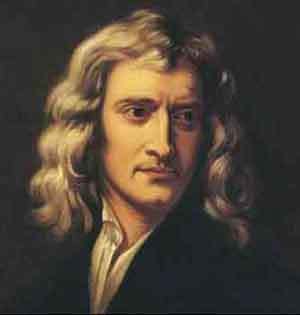
Image result for newton

Some of Galileo's ideas of motion include; concept of motion in terms of velocity, idea of force as a cause for motion, the natural state of an object (rest) has uniform motion, and objects resist changes in motion. Through the years these are improved by Newton and have become normal in schools across the world. Newton's concepts are along the lines of; a change in velocity is acceleration which is caused by an outside force, inertia is proportional to the mass of the object, momentum is the quantity of motion energy with the equation E=mc^2, and total momentum during an interaction is conserved.
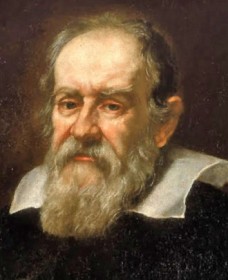
Image result for galileo

These ideas are possible because Galileo challenged what had been developed and understood before him. He wanted to be sure of the world around him, bringing facts and truth to the forfront. It caused him trouble over the years, but I'm sure it was all worth it in the end. And if he were able to see where math and science was today, I bet he would be astonished that he started the movement that caused it all.

Wednesday, March 14, 2018

Major Contributions


As we move away from Galileo's life and into his contributions to the sciences, it must be reminded that his intentions were not to defy the Church but to correct the view of the universe.


Image result for Galileo's telescopeHis major contributions were to the fields of physics, astronomy, cosmology, mathematics, and philosophy. His overall larges was by far the Copernican Theory where the Earth is not the center of the solar system. Paired with that was the ability to view phases of Venus, moons of Jupiter, the rings of Saturn, sunspots, and the lunar surface. This was all possible due to his improved telescope. In 1609 he built upon a Dutch telescope and in 1610 discovered new "stars" orbiting Jupiter. These later turned out to be the four largest moons of Jupiter. With this discovery he published "Siderius Nuncius" (The Starry Messenger) which also contained his observations of the surface of the moon along with multiple other starts throughout the Milky Way.


Image result for sidereus nunciusFrom this publication, Cosimo II de Medici appointed him mathematician and philosopher to the Medicis of Tuscany. This gave Galileo a place to push his theories and challenge his opponents. Because his observations and theories contradicted the Aristotelian view of the universe, he ran into the issues previously discussed. Further, the description of the moon in Siderius Nuncius was rough and rugged, which also went against the idea of heavenly perfection.

Another of his great contributions is his study of force. During his time at the University of Pisa, it is said that he dropped two spheres of different masses from the Leaning Tower of Pisa to demonstrate that their descent time was independent of their mass. Supposedly from this, Galileo discovered that objects fall with the same acceleration, once again going against the Aristotelian theory of gravity. This new hypothesis, that objects do not fall at a speed proportional to their mass, was outlined in his book "On Motion."

From Galileo's motion experiments, Isaac Newton built his works on motion and force. And even against the will of the Church his heliocentric view of the solar system became accepted as scientific fact (with modifications by Kepler.) Other smaller inventions include improved compasses and balances, modified and improved telescopes and microscopes, all revolutionized astronomy and biology. 
Due to bringing the beginning of change for several fields of sciences, Galileo has been considered the father of modern science.


Friday, March 2, 2018

Restricted by the Church


As Galileo studied at Padua, he began building a telescope and finished in 1604. Upon completion, he began building more and more support for the Copernican theory supporting that the Earth was not the center of the universe. Because this view challenged the Aristotle view, which was taught by the Catholic Church, Galileo began getting a lot of grief. In an attempt to avoid issues, Galileo wrote a letter explaining how the Copernican theory did not contradict the Bible. His biggest point was that the scripture was written from the perspective of people living on Earth with no access to these new scientific principles that provide an alternate (accurate) perspective.

Image result for Pope Urban VIII
Pope Urban VIII
From this letter, in 1616, Galileo was instructed by the Church to no longer "Hold, teach, or defend, in any manner" the Copernican theory. Because Galileo was a devoted Catholic, and to simply avoid conflict, he obeyed this order for seven years. In 1623, Cardinal Maffeo Barberini was elected as Pope Urban VIII. Because he and Galileo were friends, he encouraged Galileo to pursue and publish his work on astronomy, on the condition that it be entirely objective and not advocate Copernican Theory.

Thanks to this permission, Galileo published Dialogue Concerning the Two Chief World Systems in 1632. But this work advocated for Copernican theory, and thus got him in trouble. The Church did not react too kindly to this work and summoned Galileo to Rome. From September of 1632 to July 1633 Galileo was tried and questioned, but also treated with respect about his ideals. Towards the end, he was threatened and tortured until he admitted that he had supported Copernican theory through the published work. Because of this, he was convicted of heresy and placed on house arrest for the remainder of his life.

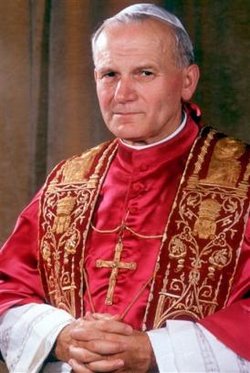
Related image
Pope John Paul II
The orders of house arrest prohibited any visitors and any of his work to be printed outside of Italy, but Galileo ignored both. In 1635 copies of the Dialogue were published in Holland, and in 1638 he wrote Two New Sciences which were also published in Holland.

Eventually the Church could no longer ignore Galileo's works, and in 1758 (over a century after his death) it lifted the ban on the majority of Galileo's works that supported Copernican theory. In the 20th century, several popes acknowledged the great work of Galileo. But it took until 1992 for Pope John Paul II to express regret about how the Church treated the Galileo situation with Copernican theory.

Friday, February 16, 2018

Galileo Galilei, where he's from.

Galileo Galilei was an Italian astronomer, mathematician, physicist, philosopher, and professor who made observations of nature that changed the sciences forever. Let us find out how he got there over the years. 
Galileo

Born February 15, 1564, Galileo was the eldest of six children to Vincenzo and Giulia. He began his formal education at the Camaldolse monastery in Vallombrosa. Fast forward to 1583, and Galileo enters the University of Pisa to study medicine. Being extremely intelligent and talented, he became interested in the fields of mathematics and physics. While he was studying at Pisa, he was introduced to the Aristotelian idea of the Earth centered universe. This view was sanctioned by the Roman Catholic Church and thus was the way everyone believed the universe was. In 1585, Galileo had to leave the university due to financial difficulties, even though he was on his way to being a professor.
Image result for university of pisa galileo
University of Pisa

Even after leaving the university, Galileo continued to study mathematics and physics. Supporting himself through various teaching positions. Through his own studies he began publishing books on motion such as The Little Balance, which earned him a job at the University of Pisa, and Du Motu, which began the deviation from the Aristotelian view. Because of this second book, he was beginning to challenge the ideology of the Church which separated him from others (in good and bad ways.) Galileo moved on to the University of Padua in 1592, where he taught geometry, mechanics, and astronomy. This began his dive into astronomy and the Copernican theory that the earth was not the center of the universe.

Image result for aristotelian model            Image result for copernicus model
                                                                                Copernican Universe